William Garrow and the Old Bailey: Law, Inequality and the Cases That Shaped Georgian London

In Georgian London, practising as a barrister at the Old Bailey was hardly considered an attractive career choice. Lawyers working in the criminal courts could be viewed with suspicion, sometimes dismissed as little more than “ambulance chasers”, while the court itself stood uncomfortably close to Newgate gaol and the foul smells that drifted from the prison.
The numbers reflected that lack of prestige. Historian J. M. Beattie recorded that, of the 484 barristers practising in London in 1784, only 10 regularly appeared at the Old Bailey. Yet William Garrow would go on to spend a decade establishing himself as one of the court’s most prominent advocates. During the ten years from 1783, he appeared in more than 1,000 trials, with roughly three-quarters of those cases involving the defence.
A courtroom in the middle of a changing Britain
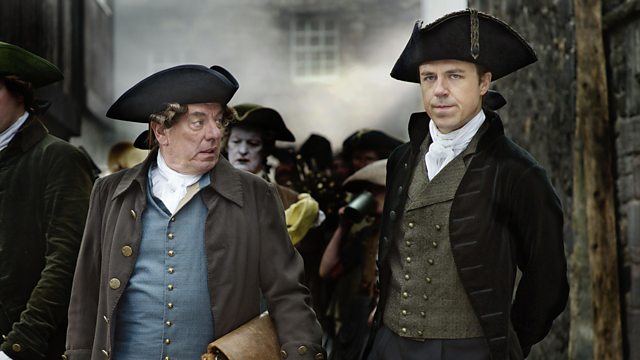
Garrow’s prominence at the Old Bailey was not simply a matter of professional ambition. The period in which he built his reputation was one of extraordinary political and social upheaval.
The late 18th century saw the revolutions in America and France, growing opposition to the slave trade, the beginnings of the women’s movement and an expanding campaign for political and social reform.
Those changes can be seen vividly in the surviving records of the Old Bailey. When the newly digitised archive was examined during the development of BBC1’s Garrow’s Law in 2008, Garrow appeared repeatedly in the proceedings, usually representing the accused.
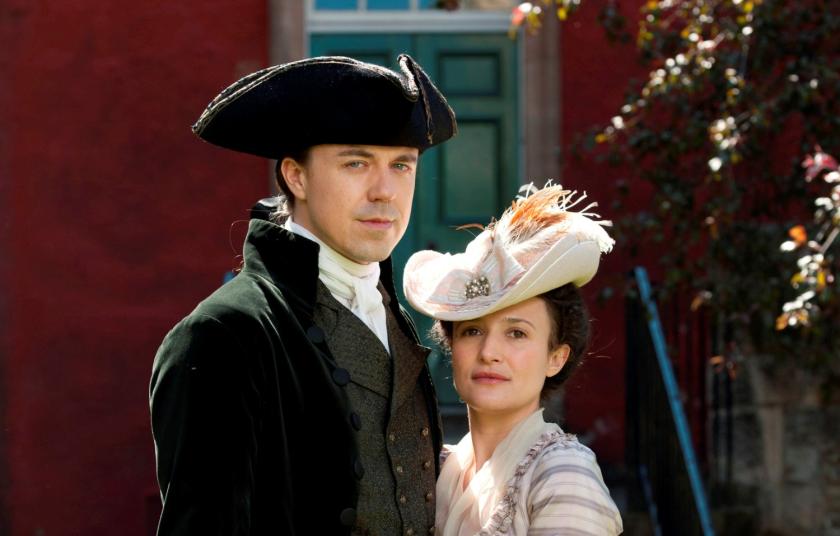
His professional life was not the only aspect of his story to attract attention. His private life was equally intriguing, particularly his “irregular relationship”, as contemporary commentators described it, with Sarah, who had a child with politician and landowner Arthur Hill.
The real Old Bailey transcripts therefore offered far more than individual criminal cases. They provided a window into a legal system undergoing significant change — and into the life of a barrister who became one of its most distinctive figures.
Fighting inequality inside the courtroom
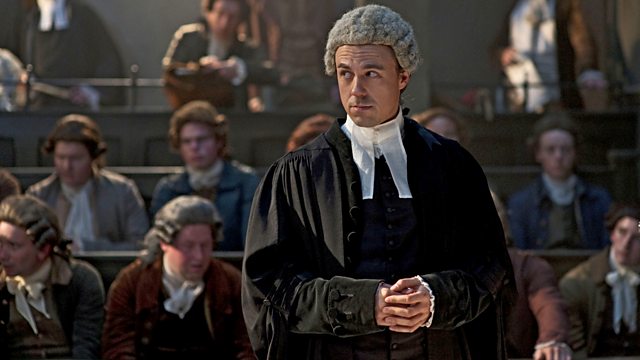
The second series of Garrow’s Law, like the first, draws heavily on Garrow’s life and on genuine cases from the period. But the programme is not intended to function as a conventional biography. Instead, it uses real legal history as the foundation for a drama about what life was like in London’s criminal courts towards the end of the 18th century.
The opening episode highlights one of the central inequalities of the period: defendants could appear in court without having access to a barrister at all.
Garrow responds by offering his cross-examination skills without payment, acting as an amicus curiae — effectively providing assistance to the court and the accused without formally taking a fee.
The storyline draws on the 1790 case of Sarah Pearson and the 1783 case involving Sarah Slade and Mary Wood. In the latter proceedings, Garrow questioned a witness without charge over what the records described as a “remarkable key”.
These cases illustrate why Garrow’s courtroom reputation grew so quickly. His approach was confrontational and persistent, particularly when challenging prosecution witnesses. His early criminal practice helped establish him as one of the most aggressive defence advocates of his generation.
The Phebe Harris case and the horror of “coining”
The second episode centres on Phebe Harris, a woman sentenced to death for counterfeiting money — an offence then known as “coining”.
The storyline combines elements from two real cases.
The first was the 1786 trial of Phebe Harris herself, in which Garrow faced the prosecutor Silvester. Garrow ultimately lost the case, and Harris was sentenced to death.
Her execution attracted an enormous crowd: 20,000 people reportedly gathered to watch the flames.
The second source was a 1790 case involving Sofia Girton, another woman sentenced to death by burning. The surviving transcript records her terrified cries as she condemned those around her.
Those words were subsequently placed in the mouth of the fictionalised Phebe Harris by Garrow’s Law writer Tony Marchant.
The decision to draw directly from courtroom transcripts is one of the series’ defining features. Rather than simply inventing dialogue to recreate the atmosphere of Georgian London, the drama frequently uses the actual language recorded during the trials.
When the law treated human beings as property
One of the most striking examples of the programme’s attempt to capture the legal controversies of the era is the case of the slave ship Zong.
The case did not involve Garrow in real life. Yet it became impossible to tell the story of late-18th-century legal London without confronting it.
In 1781, 132 Africans aboard the Zong were thrown into the sea. The ship’s owners subsequently pursued an insurance claim for the loss, turning the deaths into a legal dispute over whether enslaved people could be treated as insured property.
The first proceedings took place in 1783, and the case later came before Lord Mansfield in the Court of King’s Bench. The legal argument exposed a deeply disturbing reality of the period: the enslaved Africans were being considered within the framework of property and insurance rather than as human beings whose deaths demanded criminal accountability.
The insurers challenged the original decision, and during the appeal on 21–22 May 1783, evidence emerged concerning the circumstances surrounding the deaths and the ship’s navigation. Lord Mansfield ordered a new trial.
The case also helped fuel the emerging abolitionist campaign. Granville Sharp became involved after learning of the proceedings and regarded the Africans who had been killed not as “cargo” but as human victims. The Zong case subsequently became an important part of the history of British opposition to the slave trade.
Why Garrow was given the case in the drama

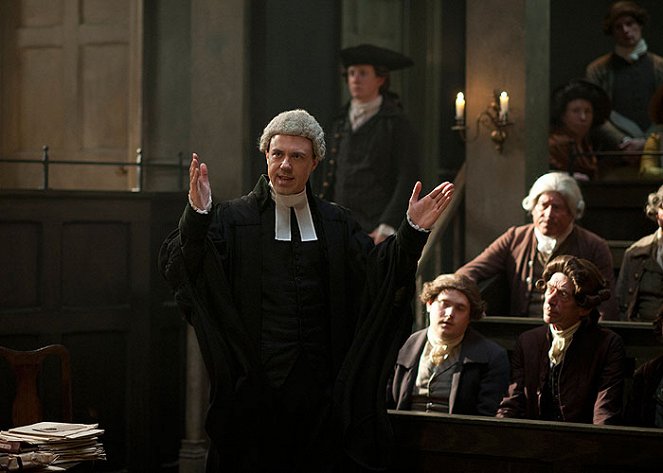
Because Garrow was not actually involved in the Zong proceedings, the television drama takes a deliberate creative step by placing him at the centre of the case.
That choice reflects the broader purpose of Garrow’s Law. The series is not presenting a courtroom documentary or claiming that every major legal controversy of the era involved Garrow personally. Instead, it uses his career as a route into the wider legal and social conflicts of Georgian Britain.
There was also a strong connection between the Zong storyline and Garrow’s later reputation. He had a personal policy of refusing to defend those involved in the slave trade. Later in his career, he oversaw the first prosecution under the Abolition of the Slave Trade Act of 1807.
Seen in that context, the decision to have Garrow confront the Zong case in the drama reflects the principles associated with him later in life, even though the historical case itself was not his.

Ultimately, the world depicted by Garrow’s Law was one in which the criminal courtroom could expose almost every major tension of Georgian society: poverty and privilege, punishment and mercy, inequality and justice, slavery and abolition.
And at the centre of that turbulent legal world stood William Garrow — a barrister who entered a profession few of his contemporaries considered glamorous, only to become one of the Old Bailey’s most formidable advocates.