Jane Austen spent her life writing some of the most perceptive romantic fiction in English literature, yet the details of her own love life remain remarkably uncertain. Beyond the well-known proposal from Harris Bigg-Wither, there is little firm evidence of romantic relationships that developed into lasting affairs. Her surviving letters and family recollections offer only fragments, leaving plenty of room for interpretation.
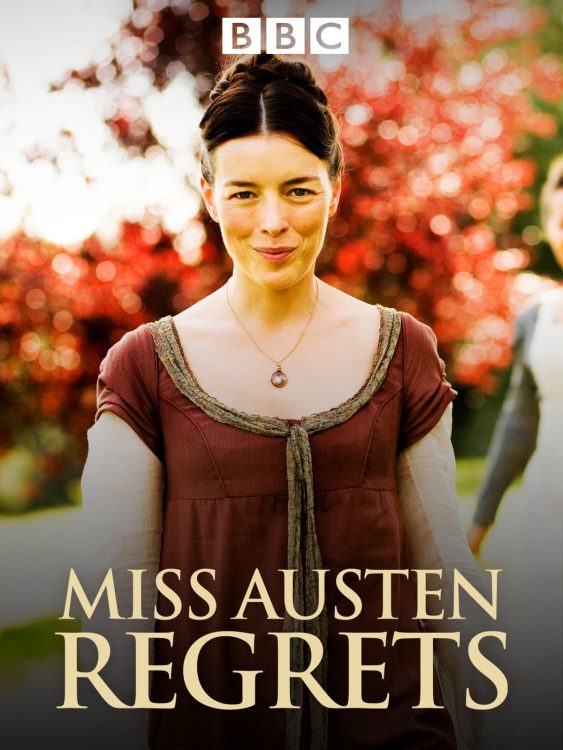
That uncertainty is at the heart of Miss Austen Regrets, Gwyneth Hughes’s imagined account of the final years of Austen’s life. Rather than presenting her as the lonely, sentimental spinster familiar from some later portraits, the drama explores a more complicated woman: witty, flirtatious, ambitious, occasionally sharp-tongued and determined to protect her independence.
Directed by Jeremy Lovering, the BBC drama asks an intriguing question: what did Austen make of the romantic choices she had made — and what might she have sacrificed by refusing to marry without love?
The Proposal Jane Could Have Accepted

The drama begins with marriage, perhaps the most appropriate subject imaginable for a story about Austen.
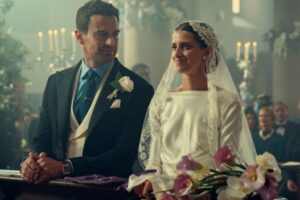
In 1802, Jane Austen, played by Olivia Williams, accepts a proposal from Harris Bigg-Wither (Samuel Roukin), a wealthy man whose fortune could have provided considerable financial security for Jane and her family.
But the decision does not sit comfortably with her.
After spending an uneasy night reflecting on the proposal with her sister Cassandra (Greta Scacchi), Jane changes her mind. She breaks off the engagement and leaves for home, despite knowing that her choice will not be welcomed by either her family or wider society.
The significance of that decision hangs over the rest of the film. Marriage to Bigg-Wither would have offered security, but Jane has chosen to follow her conviction that marriage should involve genuine affection.
As she leaves, she quietly tells herself, “Dear God let me never regret this day.”
It becomes one of the central ideas running through the drama.
Thirteen Years Later, Jane Becomes the Adviser

The story then moves forward thirteen years.
Jane is now forty and unmarried, while her niece Fanny Austen Knight (Imogen Poots), the daughter of Jane’s elder brother Edward Austen Knight, turns to her aunt for advice about courtship.
Fanny has a potential suitor in mind: the young and deeply religious John Plumtre (Tom Hiddleston). Naturally, she wants Jane’s opinion.
Her questions force Jane to confront the very issue she has spent years avoiding. What does it really mean to marry for love? And is it wise to reject a secure marriage simply because affection is missing?
Jane’s answer is characteristically direct:
“Fanny, do anything but marry without affection.”
The advice sounds confident, but the conversation also exposes an uncomfortable truth. Jane may be dispensing wisdom to her niece, but she is inevitably looking back at her own life.
She is no longer a young woman with unlimited possibilities. At forty, she is still capable of enjoying attention from men, however, and the film makes that side of her personality particularly entertaining.
At a family gathering, Jane encounters Mr. Washington, a flattering admirer. She slips easily into the pleasures of dancing, drinking and flirting, revealing the playful young woman who still exists beneath the experienced author.
Jane and Fanny Turn the Tables
One of the film’s most enjoyable sequences takes place away from the formal world of the manor.
Jane and Fanny wander through the gardens at night and peer through a window at the gentlemen inside playing cards. Instead of allowing the men to judge the women, the two begin assessing the men themselves — considering their wealth, appearance and suitability as potential husbands.
The scene cleverly reverses the usual social dynamic. For once, the women are the observers, deciding which men might actually be worth their attention.
Their private amusement comes to an abrupt end when they are discovered by Reverend Brooke Bridges (Hugh Bonneville), Fanny’s uncle and one of Jane’s former flirtations.
When Bridges questions what they are doing, Jane explains that she was simply giving her niece some moral guidance.
His response provides one of the film’s sharper comic moments.
“In the shrubbery?” he asks.
“As good a place as any for leading a young lady astray,” Jane replies.
A Woman Who Hides Behind Her Wit
By this stage, Gwyneth Hughes’s approach to Jane has become clear.
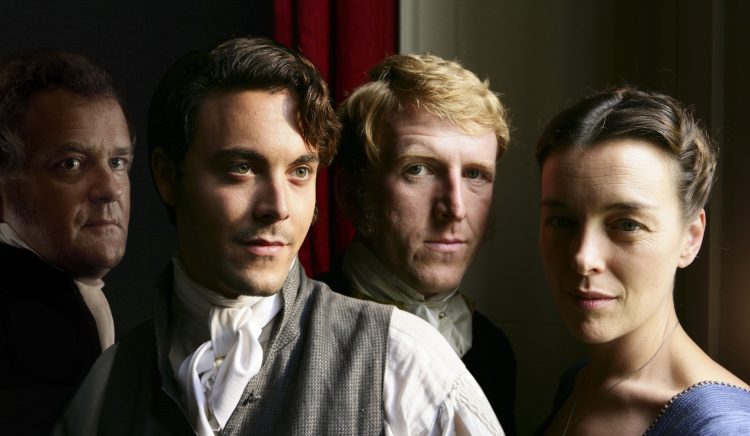
The men connected to Austen’s romantic history — Mr. Lefroy, Mr. Bigg-Wither, Reverend Papillon, Reverend Bridges and Dr. Haden — pass through her life with varying degrees of attraction and possibility. Yet the film deliberately avoids turning these encounters into a series of sweeping romances.
Instead, they provide glimpses into Jane’s emotional world and help explain why her decision to remain unmarried was more complicated than simply never finding anyone interested in her.
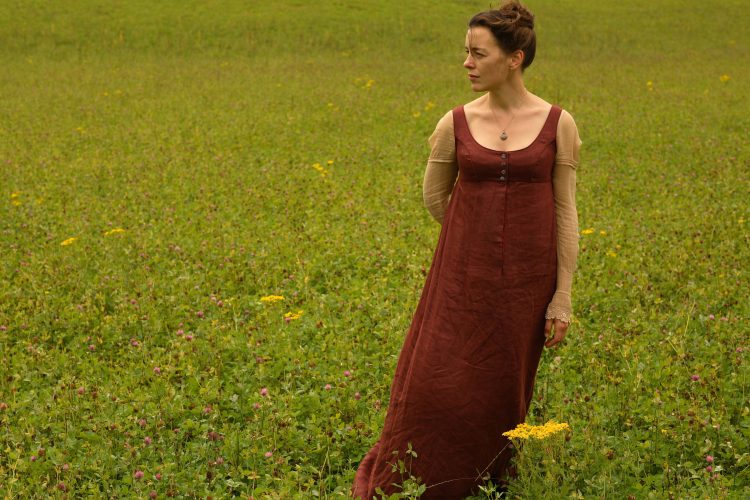
Jane herself often uses humour as a defence mechanism.
When Fanny presses her about her decision never to marry, she offers an answer that sounds flippant but reveals plenty about her personality:

“Fanny, you have at last uncovered the true reason why I never chose a husband. I never found one worth giving up flirting for.”
The joke allows Jane to maintain control of the conversation. Beneath it, however, lies the question the film keeps returning to: was independence enough, or was there something she sometimes missed?
Olivia Williams Makes Austen Feel Remarkably Alive
The greatest strength of Miss Austen Regrets is Olivia Williams’s performance.
Rather than portraying Jane as a solemn, isolated woman defined by regret, Williams gives her intelligence, humour, impatience and warmth. Her Austen can be mischievous and cutting, but she is also affectionate and emotionally vulnerable.
The Guardian similarly praised Williams’s performance, describing her portrayal as witty and brilliant while also allowing Jane to appear moody and occasionally bitter.
That complexity makes the character much more convincing. This is not a saintly literary icon being placed on a pedestal. It is a woman trying to understand her own decisions while continuing to live with their consequences.
Imogen Poots also makes a strong impression as Fanny Austen Knight. She brings energy and a slightly edgy quality to the young woman who is beginning to navigate the same complicated world of love and marriage that shaped her aunt’s life.
Greta Scacchi’s role as Cassandra is smaller, but significant. Her portrayal becomes particularly important because of the sisters’ close relationship and the film’s treatment of Austen’s surviving correspondence.
The Men Who Might Have Changed Jane’s Story
Among Jane’s potential romantic interests, Hugh Bonneville’s Reverend Bridges is particularly effective.
Bonneville plays him with restraint and sensitivity, suggesting a man whose feelings for Jane have never entirely disappeared. His relationship with her feels more emotionally layered than a simple failed romance.
Jack Huston, meanwhile, brings energy to the role of the charming Dr. Charles Haden. His presence immediately catches Jane’s attention and adds another spark of romantic possibility to the story.
Phyllida Law also stands out as Mrs. Austen. The character is portrayed as deeply disapproving, creating a household atmosphere that makes Jane’s determination to live according to her own principles even more striking.
A Biography Built From Fact and Imagination
One of the most interesting aspects of Miss Austen Regrets is that it does not pretend the unknown parts of Austen’s life are fully documented.
The drama is based on Austen’s life and letters, but its romantic encounters are necessarily an interpretation of limited historical evidence. The Jane Austen Society of North America has likewise noted that the film takes imaginative liberties, including its depiction of Cassandra’s influence over Jane’s decision regarding Harris Bigg-Wither’s proposal.
That distinction matters because the film is less a conventional biography than an imagined portrait.
Its strength comes from allowing scenes from Austen’s fictional world to echo aspects of her own life. Conversations about marriage, courtship, money and romantic disappointment often feel as though they could have come directly from one of her novels.

That creates an appealing question throughout the film: did Austen draw her fictional understanding of love from life, or did life later come to resemble the emotional worlds she created on the page?
Choosing Writing Over a Marriage Without Love
Ultimately, the drama presents Jane’s unmarried life not simply as a tragedy but as a choice.
She knew that rejecting Harris Bigg-Wither meant giving up a degree of financial security. Her decision disappointed members of her family and placed additional financial pressure on her. Yet she refused to enter a marriage without the affection she believed it required.
Writing became the life she pursued instead.
The film does not hide the cost of that decision. Jane’s frustrations, emotional vulnerability and fondness for wine make her feel human rather than idealised. At the same time, her determination to write and build a life on her own terms gives her independence a genuine sense of purpose.
The BBC’s own synopsis similarly frames the story around Jane approaching forty, apparently comfortable with being unmarried until her niece asks her to help evaluate potential husbands, forcing her to reconsider her own romantic choices.
And then comes the most poignant part of the story.
Jane dies at just forty-one.

By the end, the film leaves us with a portrait of a woman who may have wondered about the road not taken, but who ultimately believes that the life she created was the life she was meant to have.
Her death therefore carries a particular sadness. She was not simply a celebrated novelist. She was also a daughter, sister, aunt and friend whose future work would never be known.
That sense of unfinished possibility gives Miss Austen Regrets much of its emotional weight.
Verdict
Miss Austen Regrets works best when it treats Jane Austen not as an untouchable literary legend, but as a complicated woman making difficult choices.
Olivia Williams is the film’s greatest asset, bringing wit, intelligence and emotional depth to a role that could easily have become overly solemn. The supporting cast — particularly Hugh Bonneville, Jack Huston and Imogen Poots — adds further warmth and texture.
Most importantly, the drama understands that Austen’s unmarried life does not need to be reduced to a simple story of romantic failure.
It is a story about independence, family, money, affection and the difficult decision to choose one kind of life over another.
For viewers fascinated by Jane Austen beyond the pages of her novels, this BBC drama offers an engaging and thoughtful interpretation of the woman behind the romantic fiction — and leaves us with the same question that haunts Jane herself: what might have happened if she had chosen differently?
Miss Austen Regrets originally aired on BBC One in 2007 and was subsequently shown in the United States as part of PBS’s Masterpiece presentation of The Complete Jane Austen.