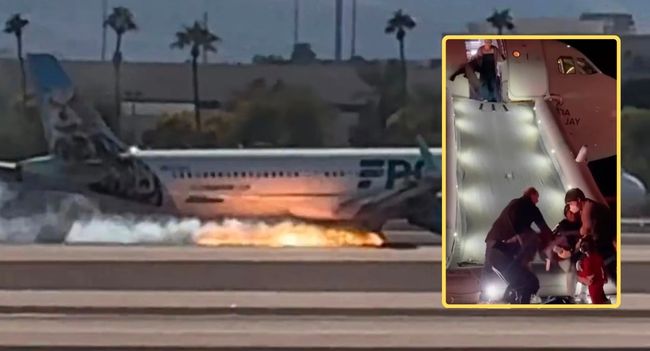
A Frontier Airlines passenger jet carrying more than 200 people was forced into a full emergency evacuation after striking a pedestrian on the runway during takeoff at Denver International Airport, an incident that immediately escalated into fire, smoke, and widespread panic inside the aircraft.
According to official reports, Flight 4345 was accelerating for departure when it collided with an unauthorized individual who had entered the active runway. The impact triggered an engine fire and sent smoke rapidly into the cabin, forcing the flight crew to abort takeoff and initiate emergency procedures on the runway itself.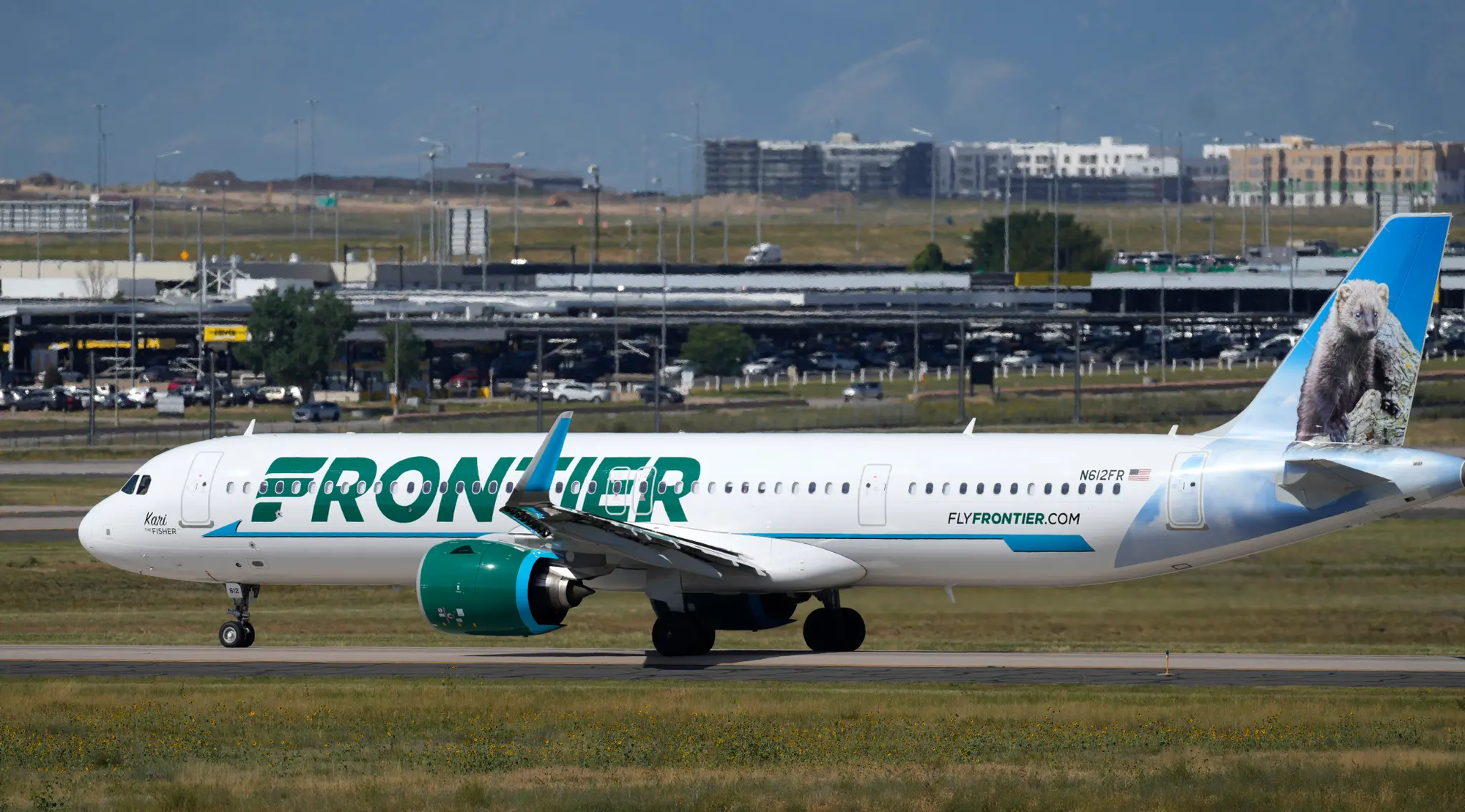
The aircraft was carrying approximately 224 passengers and 7 crew members at the time of the incident. Within seconds of the collision, the situation deteriorated as passengers reported confusion, smoke, and urgent instructions from the cockpit to evacuate immediately.
Emergency slides were deployed directly onto the runway as hundreds of passengers rushed to escape the aircraft. While all occupants were eventually evacuated safely, the process was described by witnesses as chaotic and disorienting, with smoke still visible from the damaged engine during the evacuation.
Authorities confirmed that the pedestrian involved was not an airport employee, airline staff member, or passenger. Investigators say the individual had unlawfully entered restricted airport grounds and made their way onto the active runway just before the aircraft’s takeoff sequence reached a critical speed.
The impact proved fatal for the individual, who was pronounced dead at the scene due to the severity of the collision and engine ingestion. Airport operations were immediately suspended as emergency crews extinguished the fire and secured the runway for investigation.
In the aftermath, officials reported that at least a dozen passengers sustained minor injuries during the evacuation process, with five requiring hospital treatment for further evaluation. These injuries were primarily linked to emergency slide exits and the rapid, uncoordinated movement across the tarmac during evacuation.
Federal agencies, including the FAA and NTSB, have launched a joint investigation into both the fatal runway breach and the emergency response that followed. Key areas of focus include how the individual accessed a highly restricted runway zone and whether existing perimeter security systems failed to detect or prevent the intrusion in time.
While early findings confirm a rapid sequence of breach-to-collision events, investigators are now working to reconstruct the final minutes leading up to the disaster, including surveillance gaps, perimeter integrity, and response timing that may prove critical in understanding how a secure airport environment was breached so quickly.