Desperate Romantics: A Wild and Playful Introduction to the Pre-Raphaelite Brotherhood
The first episode of Desperate Romantics makes one thing clear almost immediately: this is not a solemn Victorian biography.

Peter Bowker’s drama takes the lives, friendships and romantic entanglements of the Pre-Raphaelite Brotherhood and turns them into a lively, deliberately irreverent period romp. Rather than treating its historical figures with reverence, the series embraces their rebellious personalities and gives Victorian London a mischievous, modern energy.
The episode opens with a disclaimer explaining that the Pre-Raphaelite Brotherhood challenged the artistic establishment of the mid-19th century. Inspired by the real world but willing to take imaginative liberties, the drama similarly announces that this is a fictionalised interpretation of their lives and loves.
That warning sets the tone for everything that follows.
Enter Fred Walters

The story begins with Fred Walters, played by Sam Crane, running through a crowded street with his coat tails flying behind him.
Walters is a fictional character and an enthusiastic admirer of the Pre-Raphaelite Brotherhood. His narration provides the audience with an energetic introduction to the artists and their unconventional world.
Rather than simply observing them, he quickly becomes involved in their ambitions.
The Brotherhood needs two things: a striking red-haired muse who can help challenge the established artistic order, and the backing of the influential art critic John Ruskin, played by Tom Hollander.
Ruskin is portrayed as a highly mannered intellectual fond of elaborate observations about beauty — but considerably less comfortable with matters of sex.
Meet the Pre-Raphaelites
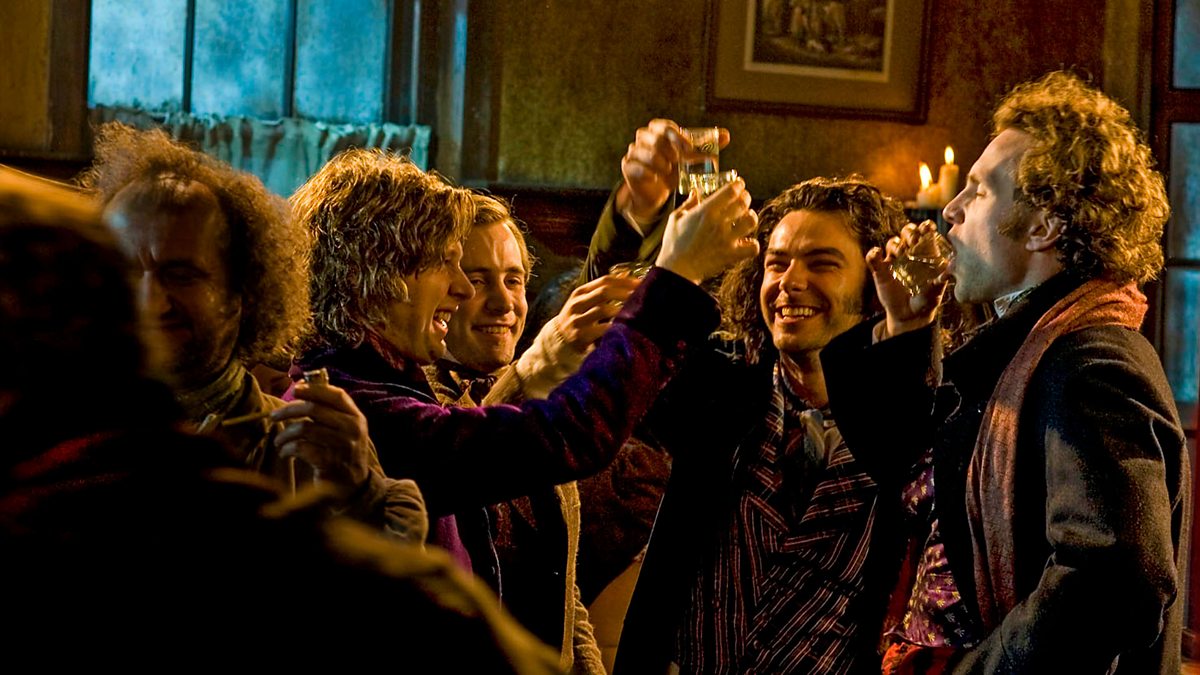
At the centre of the group is Dante Gabriel Rossetti, played by Aidan Turner.
Rossetti is presented as the charismatic, swaggering and womanising unofficial leader of the Brotherhood. He is confident, flamboyant and seemingly incapable of hiding his enthusiasm for either art or women.
His larger-than-life personality makes him an obvious frontman for a group determined to disrupt the artistic establishment.
Then there is William Holman Hunt, portrayed by Rafe Spall.
Hunt is considerably more tense and emotionally volatile. The episode repeatedly hints at the religious and sexual conflicts that seem to torment him, including a memorable sequence in which he unleashes his frustration on a punching bag.
John Millais, played by Samuel Barnett, completes the central trio.
Young and extraordinarily talented, Millais is already capable of attracting attention because of his artistic ability. His youth, however, also makes him the target of teasing from his older companions, particularly Rossetti.
Friendship, rivalry and rebellion
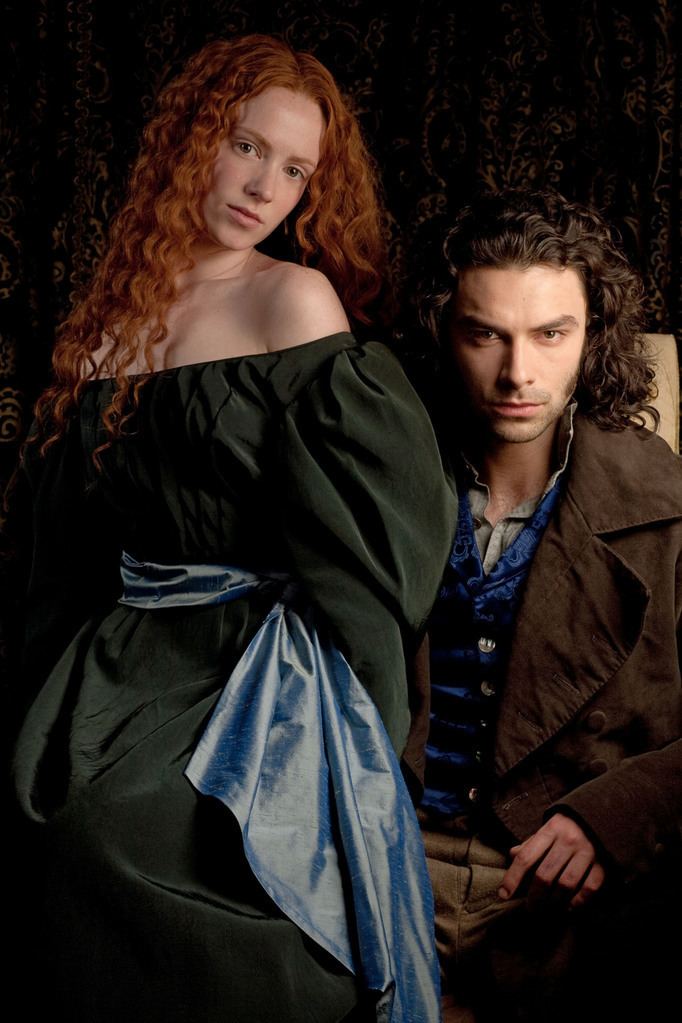
The three artists may share a determination to shake up the complacent Victorian art establishment, but their friendship is far from uncomplicated.
Competition runs beneath their association, with each man determined to establish himself.
That tension becomes increasingly important as the episode develops, particularly when romantic and sexual interests begin to complicate their artistic ambitions.
The most significant figure in this growing conflict is Lizzie Siddal, played by Amy Manson.
Her striking red hair and delicate appearance make her an obvious candidate for the muse the Brotherhood has been seeking. But her presence also threatens to disrupt the group’s already fragile balance.
The artists’ fascination with Lizzie becomes another source of competition between them, creating tensions that could prove more damaging than the hostile reviews they are already facing from the establishment.
A Victorian drama with a modern sense of humour
What makes the episode distinctive is the way it refuses to behave like a traditional historical drama.
The story repeatedly mixes its Victorian setting with deliberately cheeky humour, physical comedy and exaggerated performances.

The Brotherhood’s more chaotic moments are accompanied by a playful musical refrain that signals the possibility of an imminent fight or some equally unruly behaviour.
There is also a recurring visual gag in which the three artists stride together in formation. Even their hats become part of the joke, with Rossetti’s conspicuously larger than those worn by his companions.
These touches reinforce the show’s central approach: historical characters are being used as the basis for an entertaining fictional drama rather than presented as untouchable cultural icons.
An unconventional take on Victorian art
The first episode establishes Desperate Romantics as a story about much more than painting.
It is about ambition, friendship, rivalry, attraction and the desire to challenge an establishment that has become comfortable with its own traditions.
The Pre-Raphaelite Brotherhood’s rebellion against conventional art provides the historical foundation, but their relationships supply the emotional engine.
With Rossetti’s confidence, Hunt’s inner turmoil, Millais’s youthful brilliance, Walters’s wide-eyed enthusiasm and Lizzie’s growing importance, the series creates a lively ensemble that is as interested in personal chaos as it is in artistic revolution.
Whether that combination of flamboyant Victorian personalities, sexual tension and considerable historical licence works will depend largely on how much traditional period-drama seriousness a viewer expects.
But from its opening disclaimer to its final moments, the first episode makes its intentions unmistakable: Desperate Romantics wants to have fun with the past — and it has no intention of apologising for it.