Another Sunday brought another trio of very different television experiences: the BBC’s adaptation of Laurie Lee’s Cider With Rosie, the increasingly dark This Is England ’90, and another episode of Downton Abbey. One looked back on childhood with warmth and poetry, another plunged its characters into painful memories and family secrets, while the third continued to demonstrate just how difficult it can be for Downton to sustain its many storylines.
Cider With Rosie captures the poetry of Laurie Lee
Adaptations of classic literature inevitably invite complaints. Something is changed, something is removed, and something that worked beautifully on the page may not translate quite as effectively to television.
That is particularly true when a 300-page book has to be shaped into a 90-minute drama. Different mediums demand different choices, and some trimming or alteration is unavoidable.
Fortunately, Ben Vanstone handles that challenge with considerable skill in Cider With Rosie, the BBC1 adaptation of Laurie Lee’s much-loved coming-of-age memoir. The BBC’s 2015 season of Sunday-night literary adaptations concluded with this story of Lee’s childhood in a Gloucestershire village during and after the First World War.
Some changes from the book are noticeable. The uncles have disappeared, while the grandmothers, Trill and Wallon, remain. The adaptation also moves back and forth through time rather than following Lee’s thematic structure exactly.
But those changes do not prevent the drama from capturing something much more important: the poetry and spirit of Lee’s writing.
It evokes a form of village life that was already disappearing by the end of the First World War and has long since vanished from everyday experience. More importantly, it understands the strange intensity of childhood and adolescence, when almost everything seems new — friendships, embarrassment, desire, discovery and first love.
That combination of memory and emotion gives Cider With Rosie its particular warmth. It would be difficult to watch without being reminded, in some way, of one’s own childhood, adolescence and early romantic experiences, regardless of when or where they happened.
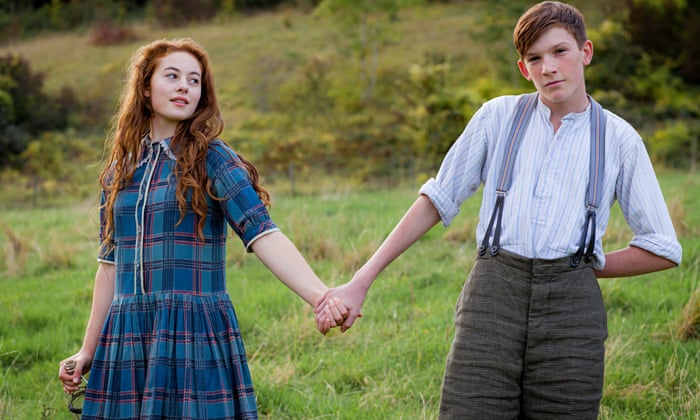
A tender first kiss

The long-awaited kiss between Loll and Rosie is beautifully handled.
The moment has been building throughout the story, even if Loll himself does not fully understand where his feelings are leading. Timothy Spall, providing the older Laurie Lee’s narration, describes the kiss in characteristically poetic terms, although his delivery occasionally leans a little too heavily into rural nostalgia.
The performances are one of the adaptation’s greatest strengths.
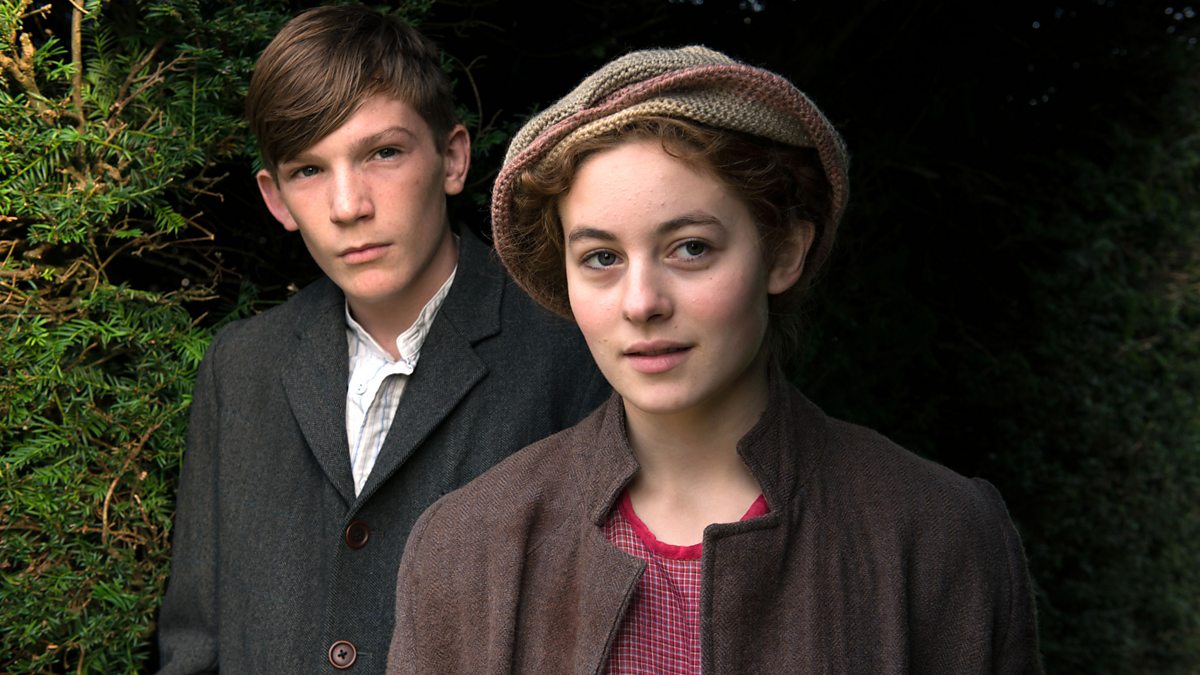
Archie Cox captures teenage Laurie as awkward, embarrassed, mischievous and increasingly curious about the world around him. Georgie Smith, playing the younger Laurie, is equally appealing, giving the character an innocence that makes the childhood sections particularly engaging.
Ruby Ashbourne Serkis’s Rosie gradually becomes more captivating, both to Laurie and to the audience. Samantha Morton brings warmth and humanity to Annie, Laurie’s mother, while Jessica Hynes gets plenty of comic mileage from the school scenes as Mrs Crabby.
The Gloucestershire landscape is another star of the production. The drama was filmed around the Slad Valley, the landscape associated with Lee’s memories, and its beauty gives the story an almost timeless quality.
For all the changes made to the source material, the adaptation succeeds where it matters most: it makes the world Lee remembered feel vivid again.
This Is England ’90 turns sharply darker
There was also a glimpse of rural English beauty in the previous episode of This Is England ’90, but by this point the sunshine has disappeared.
Shane Meadows’ drama has moved firmly into darker territory, and the latest episode is one of those television hours that remains with you long after the credits.
The dinner gathering at the centre of the episode is particularly devastating. What begins as an ordinary meal becomes the setting for revelations about Lol’s past, her father and the circumstances surrounding his death. At the same time, Milky is forced to confront the prospect of Combo returning from prison and living under the same roof as a child from a non-white family.
The episode’s central revelation is extraordinarily difficult to watch. Lol finally tells those closest to her the truth about what happened to her father, explaining that she killed him after he sexually abused her. The revelation shatters Kelly, while Milky struggles with the idea of Combo returning to the family home. The dinner becomes less a social gathering than an emotional reckoning.
It is an extraordinary piece of television because it refuses to make the pain easy to watch.
By the time the episode ends, the effect is exhausting rather than merely shocking. The characters have carried their secrets for years, and once those secrets are finally spoken aloud, there is no simple way to put everything back together.
Yet that darkness is balanced by one of the qualities that has always made This Is England so affecting: tenderness.
Gadget’s kindness toward Kelly feels like genuine friendship arriving at exactly the moment it is needed. And then there is Lol and Woody.
Their relationship has survived betrayal, guilt, painful memories and the pressure of everything happening around them. Their love gives the series an emotional centre, and the fact that the audience can care so deeply about them is a considerable achievement for Meadows and his cast.
The wider series had already established how much these characters had endured. Lol remained haunted by her past, Woody had tried to build a stable life with her, and Combo’s impending release threatened to reopen wounds that had never properly healed.
This episode brings all of that history crashing into the present.
Downton Abbey struggles to keep its storylines alive

Then there is Downton Abbey.
After the emotional force of Cider With Rosie and This Is England ’90, the contrast is difficult to ignore. The period drama’s increasingly complicated collection of storylines can feel much less compelling by comparison.
The hospital storyline remains particularly tedious, while the kidnapping plot is resolved with remarkable speed. Anna’s fertility treatment is potentially more interesting because it carries an emotional dimension that may resonate with viewers who have experienced similar difficulties.
But much of the surrounding material feels increasingly mechanical, with one plot being introduced before another has had much chance to breathe.
That is not to say there is nothing enjoyable about Downton. The series still has its familiar pleasures, from the performances to its polished period setting, and this episode offers some welcome moments involving the pigs.
Indeed, the pigs may be the most entertaining development of all.
The episode also continues several of the season’s other storylines, including Lady Mary’s growing connection with racing driver Henry Talbot, Thomas taking on greater responsibility as butler, Baxter’s dilemma and the return of Gwen.
But compared with the emotional immediacy of the other Sunday dramas, Downton increasingly feels like a show trying to keep too many plates spinning at once.
Its elaborate period setting remains attractive, but the drama is at its best when the characters and their emotions take centre stage. When the storytelling becomes dominated by hospital administration, crime subplots and quickly moving pieces of business, the charm starts to wear thin.
And so, on this particular Sunday, the three dramas offered three very different experiences.
Cider With Rosie looked backward with affection, transforming childhood memories into something warm, lyrical and recognisable. This Is England ’90 did almost the opposite, forcing its characters to confront the darkest parts of their past and showing how destructive buried secrets can become. Downton Abbey, meanwhile, continued along its increasingly crowded path, occasionally finding moments of charm but struggling to match the emotional impact of the other two.
For sheer atmosphere and emotional resonance, Cider With Rosie and This Is England ’90 were the clear standouts. One reminded us of how vividly childhood can live in memory; the other showed just how painful those memories can become when the past refuses to stay buried.