Netflix’s Blood, Sex & Royalty could easily have become another awkward attempt to make Tudor history “cool” for a modern audience. Instead, the three-part docudrama delivers a surprisingly lively and accessible retelling of the explosive relationship between Anne Boleyn and Henry VIII, combining scripted drama with commentary from historians and academics.
Released on November 23, 2022, the series takes a deliberately modern approach to one of the most familiar stories in British royal history. It focuses on Anne’s rise, her relationship with Henry, her reformist ideas and the political dangers surrounding her position at court.
A surprisingly effective mix of drama and history
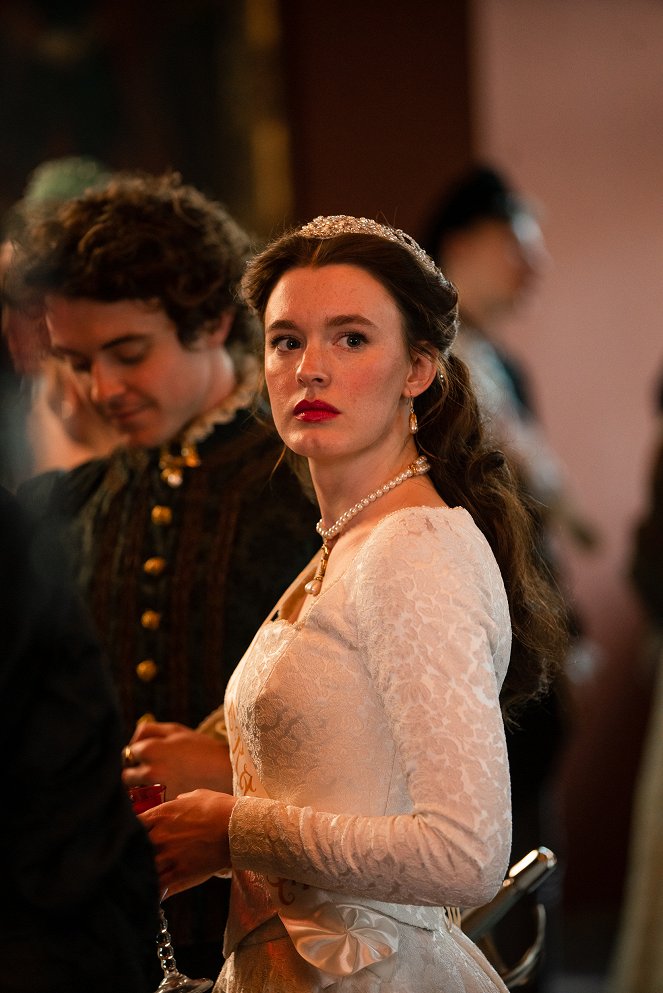
There is an obvious danger in combining historical reconstruction with documentary interviews. Done badly, the result can feel awkward from both directions: actors appear uncomfortable in period costumes, dialogue becomes overly simplified and historians seem to be deliberately holding back their expertise.
Blood, Sex & Royalty largely avoids that trap.
The scripted sequences are energetic, colourful and frequently funny, while the historians provide the historical framework around them. Among those contributing are Tracy Borman, Suzannah Lipscomb, Lauren Mackay and Owen Emmerson. Rather than attempting to compete with heavyweight historical dramas such as Wolf Hall, the series opts for something considerably more straightforward and contemporary.
That decision works particularly well when the drama focuses on Anne Boleyn.
Amy James-Kelly gives Anne a fresh identity

Amy James-Kelly is the standout performer as Anne, portraying her as intelligent, outspoken and increasingly aware of the limited choices available to women at the Tudor court.
This is very deliberately a modern interpretation of Anne. The series places particular emphasis on her intellectual curiosity, her broad reading and her interest in the reformist ideas associated with William Tyndale.
Netflix describes the character as a freethinker whose experiences at the French court helped shape her worldview. Her outspoken nature eventually attracts the attention of Henry VIII, setting in motion the relationship that would transform English history.
The writing frequently compresses complicated political and social realities into sharp, contemporary exchanges. Anne’s observations about the treatment of women, for example, make the imbalance of power surrounding her immediately understandable.
That modern language will not appeal to everyone, but it gives the character an immediacy that prevents her from becoming another distant historical figure.
Henry VIII is presented differently, too
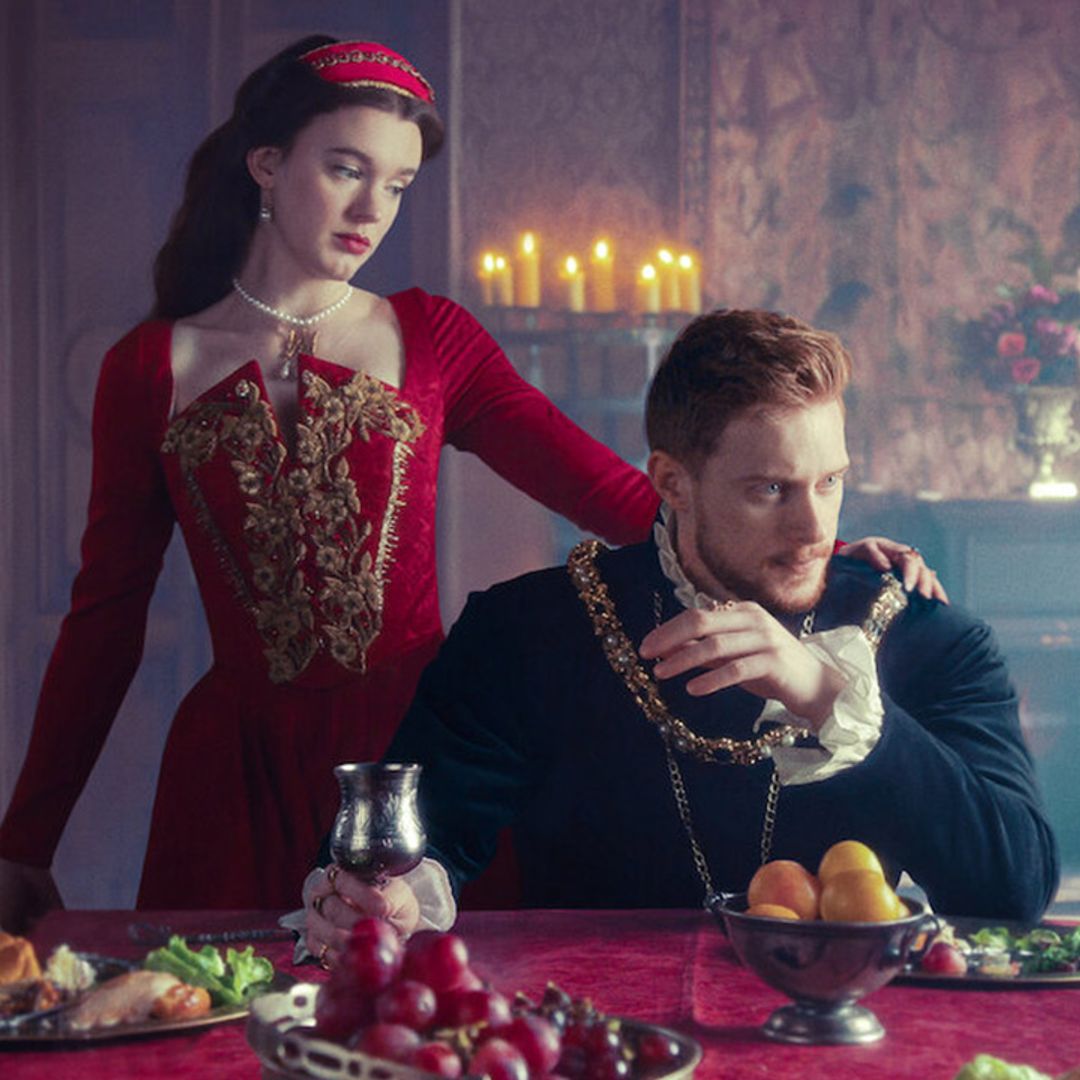
Max Parker plays Henry VIII as a charismatic and physically attractive young king whose fascination with Anne becomes increasingly consequential.
The series does not portray Anne as simply manipulating a foolish monarch. Instead, Henry is shown as a powerful man who is genuinely drawn to her while also allowing his desires to influence decisions that have enormous political consequences.
That distinction matters because it changes the dynamic between the pair. Anne is ambitious and strategic, but Henry is not simply her pawn.
Their relationship is set against the king’s existing marriage to Catherine of Aragon and his increasingly desperate efforts to find a way out of it. As the story progresses, Anne’s position at court becomes more precarious, particularly as political and personal enemies gather around her.
The women around Anne matter

One of the more interesting aspects of this version is its emphasis on the position of women within Tudor society.
Anne’s relationship with her sister Mary is part of the story, while Catherine of Aragon remains an important presence in the political conflict surrounding Henry’s marriage.
The series also introduces viewers to the wider world of the Boleyn family and the court, including George Boleyn, Thomas Boleyn, Jane Boleyn and Lady Worcester.
Anne’s understanding of the world is therefore shaped not only by Henry but by the women and men surrounding her. Her choices have consequences because she is operating inside a court where marriage, sexuality, religion and political power are inseparable.
William Tyndale and the religious conflict
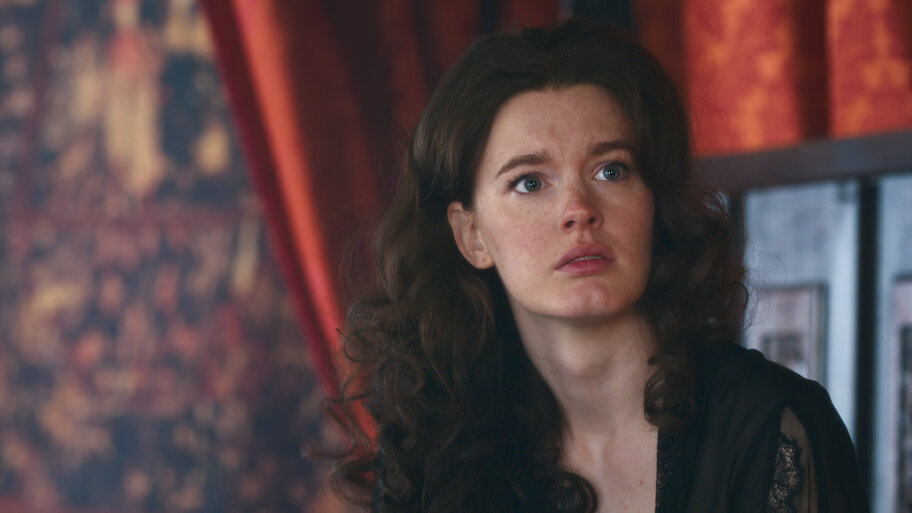
The drama also gives attention to Anne’s support for the writings of William Tyndale, whose religious ideas were considered dangerous in the Tudor political and religious landscape.
In the second episode, Anne introduces Henry to Tyndale’s outlawed writings as the king searches for a way to escape his marriage to Catherine of Aragon.
This helps broaden the story beyond romance.
Anne’s relationship with Henry is not presented simply as a private affair between two powerful people. Her ideas, religious sympathies and ambitions become entangled with the wider political transformation taking place around them.
That makes her rise both more complicated and more dangerous.
The familiar story moves toward catastrophe
The three episodes trace Anne’s transformation from an outspoken young woman into one of the most powerful figures at Henry’s court.
The first episode introduces her emergence as a freethinker and her growing attraction to Henry. The second follows the king’s attempt to escape his marriage while Anne becomes increasingly involved in the religious and political questions surrounding him. By the third, uprisings, personal tragedies and growing hostility begin to threaten the position she has fought so hard to secure.
The series therefore understands that viewers already know where the story is heading.
Its task is not necessarily to surprise audiences with the ending, but to make the familiar journey feel immediate again.
Not everyone will appreciate the modern approach
Historical purists are likely to have plenty of objections.
The series consciously uses a feminist interpretation of Anne, highlighting her intellectual independence and egalitarian instincts. It also gives the characters dialogue that feels deliberately contemporary rather than attempting to reproduce the precise speech patterns of the 16th century.
For viewers looking for a meticulous historical reconstruction, those choices may be frustrating.
There is also inevitably a great deal that a three-part series cannot include. Tudor history is filled with political manoeuvring, religious conflict, family rivalries and competing interpretations, and reducing that material to three episodes means leaving considerable detail behind.
But that is also part of the show’s purpose.
Blood, Sex & Royalty is not trying to be an exhaustive academic examination of Henry VIII and Anne Boleyn. It is a hybrid of historical documentary and scripted drama designed to make a centuries-old story feel immediate, dramatic and accessible.
Netflix itself describes it as a modern take on British royal history, combining period drama with documentary elements.
A deliberately accessible Tudor drama
What makes Blood, Sex & Royalty work is its willingness to embrace its own limitations.
It is not Wolf Hall, nor does it try to be. Instead, it uses strong performances, brisk storytelling, historian commentary and a distinctly modern perspective to revisit a story that has been dramatized countless times before.
Amy James-Kelly brings particular energy to Anne Boleyn, while Max Parker gives Henry VIII a more charismatic presence than the familiar caricature of the monstrous Tudor king.
The result is a fast-moving three-part historical drama that places Anne at the centre of her own story — not merely as Henry VIII’s doomed second wife, but as an ambitious, intelligent woman whose ideas, relationships and choices helped reshape the world around her.
And even for viewers who already know how the story ends, this version offers a fresh reason to look at the most famous Tudor romance from a different angle.